
Next Generation Visuo-Haptic Media for Inclusive Immersive Reality
Acronym: XR-SENSE
Duration: 36 months
Timeline: 2026–2029
Project Type: European Research Project
Funding Agency: Horizon Europe
Grant Number: 101297892
Call: HORIZON-CL4-2025-03-HUMAN-14
XR-SENSE is a European Union-funded project under the Horizon Europe research and innovation programme, bringing together a multidisciplinary consortium of partners from academia, research, industry and technology providers.
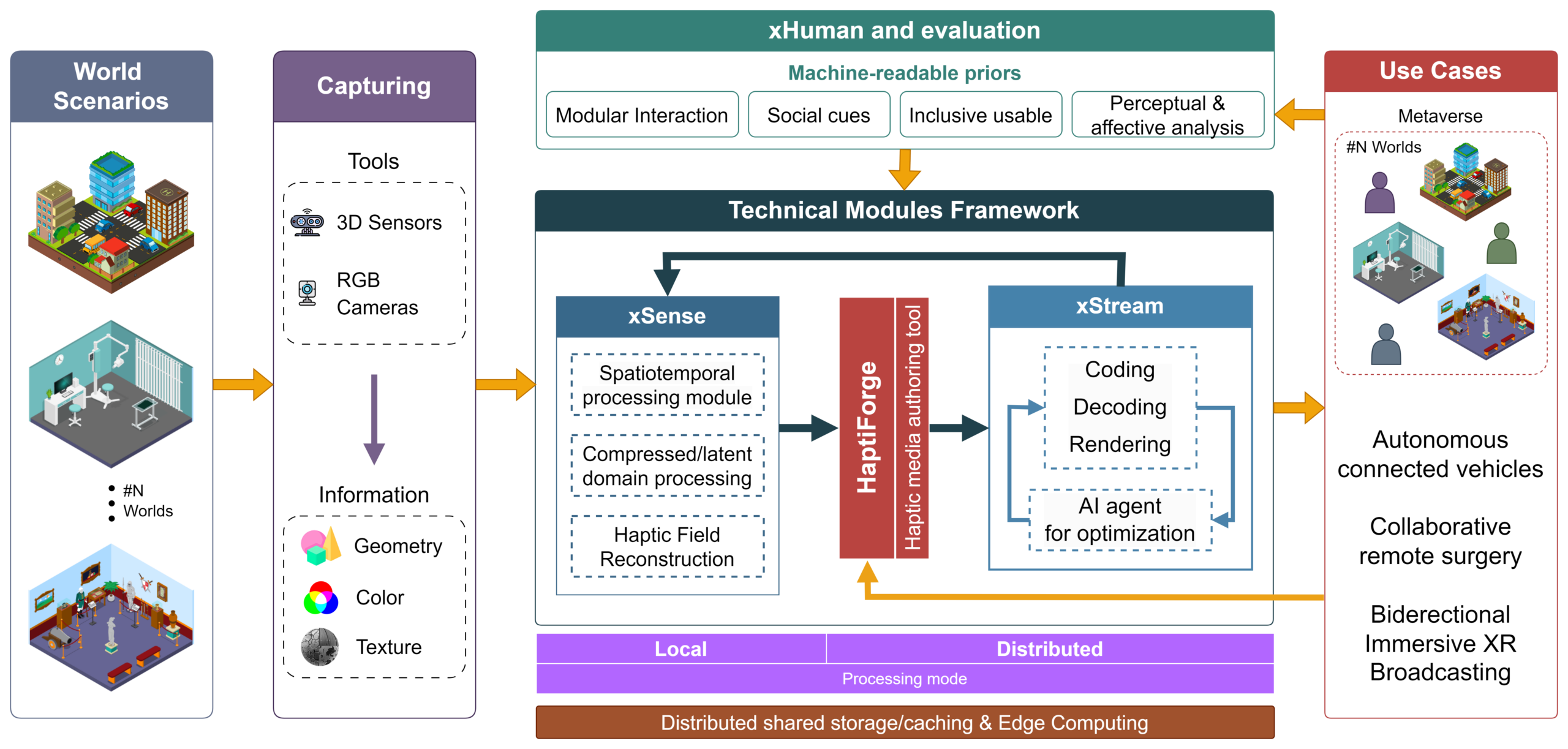
The main objective of XR-SENSE is to develop next-generation visuo-haptic media technologies for inclusive immersive reality. The project focuses on enabling realistic, interactive and accessible XR experiences by combining advanced multimodal sensing, scene analysis, reconstruction, adaptive coding, low-latency streaming, interactive rendering, haptic feedback and human-centred XR interaction.
The initiative aims to overcome key limitations of current XR systems, including limited realism, high latency, poor synchronization between visual and haptic content, lack of scalable multimodal streaming, and insufficient consideration of human perception, trust, accessibility and inclusion. XR-SENSE will develop a modular technology framework integrating xSense, xStream and xHuman components, validated through demanding pilots in connected and autonomous vehicles, remote collaborative surgery, and immersive XR broadcasting.
In the XR-SENSE project, AviSense plays a key role in the connected mobility pilot, jointly leading Pilot 1 with IDNEO, which focuses on Connected and Autonomous Vehicles. AviSense contributes its expertise in AI-based scene understanding, multimodal sensing, cooperative perception, occlusion-aware perception, XR visualisation and safety-critical mobility applications.
AviSense is responsible for supporting the definition and validation of mobility-related XR scenarios, including collaborative awareness through XR overlays of occluded objects and XR-space remote co-pilots for social telepresence and infotainment. Through XR-SENSE, AviSense will help transform distributed vehicle and infrastructure sensing into real-time, explainable and visuo-haptic XR information for drivers, passengers and remote users, supporting safer, more inclusive and more immersive connected mobility experiences.
Inclusiveness and Trust in the Interaction Between Users and new Automated Modes of Road Transport and Mobility Services
Acronym: AutoTRUST
Duration: 36 months
Timeline: 2024-2027
Project Type: European Research Projects
Funding Agency: Horizon 2020
Website: https://autotrust-he.eu/
AutoTRUST is a Horizon Europe research and innovation project focused on developing trustworthy, inclusive, and user-centric technologies for Connected, Cooperative and Automated Mobility (CCAM). The project brings together a multidisciplinary consortium of industrial, research, academic, and end-user partners to improve safety, comfort, accessibility, and trust in automated vehicles and future mobility services.
The main objective of AutoTRUST is to develop an AI-enabled self-adaptive framework that enhances the onboard experience of passengers and supports personalized, inclusive, and resilient automated mobility. The project combines advanced internal and external monitoring, multimodal sensing, cooperative situational awareness, in-cabin personalization, virtual assistant technologies, human–machine interfaces, and user-centered design methodologies. These technologies are validated through multiple pilots addressing public transport, autonomous mobility services, industrial vehicles, and vulnerable user groups.
What the AviSense’s Simulator Demonstrates
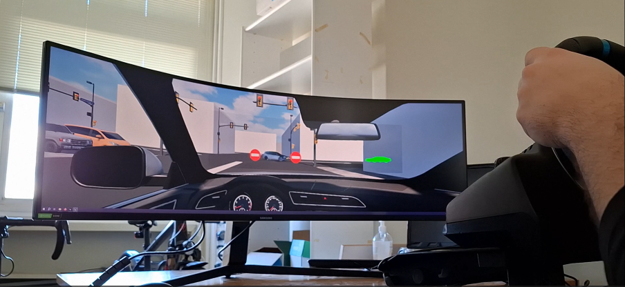
The simulator presents a virtual urban-driving environment in which users can explore how connected and automated vehicle technologies interact with the driver and the surrounding road environment.
Virtual overlays can highlight nearby vehicles, pedestrians, road hazards and other relevant events in their correct spatial position. The AR interface is designed to help the driver:
- Identify potential hazards more quickly
- Understand where an alert is coming from
- Maintain awareness of road users that may be partially or fully occluded
The AR component highlights how information from vehicle sensors, infrastructure cameras and connected systems can be transformed into intuitive visual guidance. Its purpose is not to replace the driver’s attention, but to extend situational awareness and support faster, safer and better-informed decisions. The main objective is to highlight how:
- Information from vehicle and infrastructure sensors can improve situational awareness
- Drivers can remain informed and in control when automated assistance is active
- Human-centred interfaces can improve safety, usability and trust in connected and automated vehicles
The simulator is not intended as a conventional driving game. It is an interactive demonstration of how trustworthy AI and intuitive interfaces can support safer and more informed mobility.
How to Use the Simulator
- Wait for the simulator to load fully. Loading time may vary depending on your device and internet connection.
- Select Enter Full Screen for a more immersive experience. Press Esc to exit full-screen mode.
- Click inside the simulator window to activate the controls.
- Select one of the available scenarios and start the simulation. You can choose between different weather conditions and different visibility interfaces to explore how the system performs under varying environmental and visual conditions.
- Use the arrow keys or the W, A, S and D keys to navigate, where manual movement is available.
- Move the mouse to rotate the driver’s head and look freely in any direction within the simulated environment.
- Press M to release the mouse pointer from the simulator and move it outside the application window.
- Use the mouse pointer to select buttons, change available options and interact with the simulator interface.
For the best experience, use a desktop or laptop computer with an updated web browser.
Ergonomic Analysis and Adaptive Vehicle Interior Design
The following video presents the work carried out within AutoTRUST Task “Ergonomic Analysis and Interior Adaptation”, focusing on the development of a simulation framework for the systematic evaluation and optimisation of vehicle interiors.
The framework enables users to define and modify a wide range of parameters, including the anthropometric characteristics of a digital occupant and the configuration of the vehicle interior. Adjustable elements include the seat position and rails, steering wheel and steering column, head-up display, centre console and other controls that may influence occupant posture, reachability, comfort and fatigue.
For each interior parameter, users can specify minimum and maximum values, together with a step size. The system then automatically generates and evaluates multiple vehicle interior configurations. Digital avatars with different heights, body proportions and other occupant characteristics perform predefined in-cabin interaction tasks, such as reaching controls, using displays and monitoring the surrounding environment.
For every combination of avatar profile, interior configuration and interaction sequence, the resulting posture is assessed using the Rapid Upper Limb Assessment (RULA) methodology. The RULA score provides a quantitative indication of the ergonomic strain associated with the occupant’s posture.
By running multiple simulation iterations, the framework identifies the configuration of interior parameters that minimises the cumulative ergonomic strain for a specific occupant profile and interaction scenario.
This approach supports:
- The evaluation of different occupant sizes and body characteristics.
- The real-time assessment of changes to vehicle interior components.
- The identification of potentially uncomfortable or high-strain interactions.
- The optimisation of seat, steering, display and control positions.
- The development of inclusive, adaptable and user-centred vehicle interiors.
The overall objective is to enable data-driven interior adaptation strategies that improve comfort, accessibility and efficiency while reducing physical strain and fatigue, particularly during long journeys and future automated-driving scenarios.
Occlusion-Aware Cooperative Perception and AR-Powered Situational Awareness for Safer Urban Mobility

Acronym: XRay-Mobility
Duration: 9 months
Timeline: 2025–2026
Project Type: European Research Project / SNS JU Large-Scale Trials and Pilots
Funding Agency: Smart Networks and Services Joint Undertaking under Horizon Europe
Website: https://6gpath.eu/
6G-PATH is a European Union-funded project under the Smart Networks and Services Joint Undertaking, aiming to accelerate the validation and adoption of Beyond 5G and 6G technologies through large-scale pilots and trials across Europe.
The main objective of 6G-PATH is to foster the development, integration, and validation of new tools, services, and applications using 5G/6G infrastructures, while measuring both technical Key Performance Indicators and broader Key Value Indicators. The project includes multiple advanced testbeds and supports innovative use cases through Open Calls, enabling SMEs, startups, research organisations, and technology developers to deploy and evaluate their solutions in realistic networked environments.
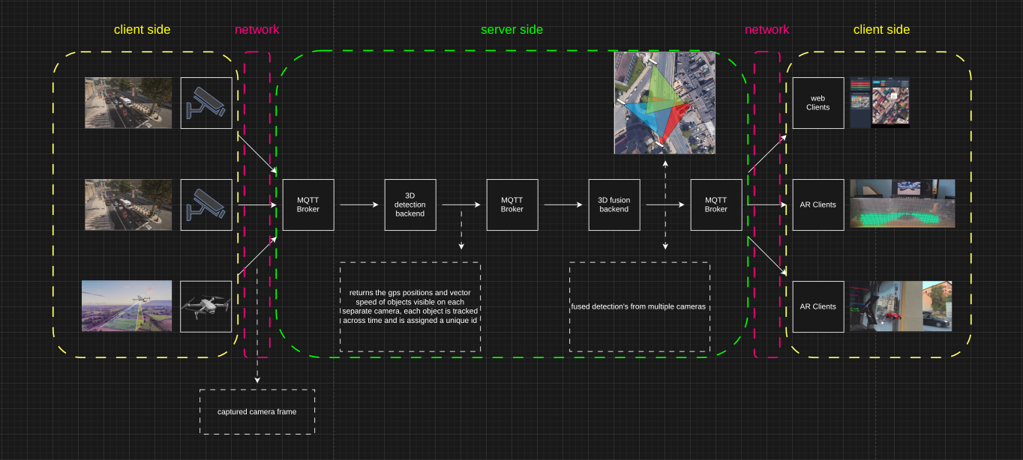
Within 6G-PATH Open Call #2, AviSense participates with XRay Mobility, an occlusion-aware cooperative perception and AR-powered situational awareness system for safer urban mobility. The use case is aligned with the Smart City vertical and focuses on V2X sensing and communication. XRay Mobility uses distributed camera infrastructure, edge-based AI processing, multi-camera perception, and AR visualization to help road users and operators perceive hazards that are normally hidden due to buildings, parked vehicles, vegetation, or complex urban layouts.
AviSense is responsible for developing and validating the XRay Mobility platform, including the map-based operational dashboard, camera ingestion, AI-based detection of vehicles and pedestrians, geolocated event alerts, lightweight multi-camera association, occupancy and traffic analytics, and AR-ready visualization of static and dynamic situational awareness information.
AviSense aims to advance XRay Mobility from a prototype platform towards a validated smart-city service, demonstrating its potential for cooperative perception, infrastructure-assisted hazard awareness, and AR-based field guidance in urban environments. The project provides AviSense with access to advanced 5G/6G testbed infrastructure, technical support, KPI/KVI evaluation methodology, and a European ecosystem of telecom, research, and smart-city stakeholders.
Transformative Responsible Uptake & Systemic Trust for AI in Mobility
Acronym: TRUST-AI
Duration: 12 months
Timeline: 2025–2026
Project Type: European Cascade Funding / ORRI Incubator Project
Funding Agency: REINFORCING – Responsible Digitalisation / European Union
Website: https://www.reinforcing.eu/
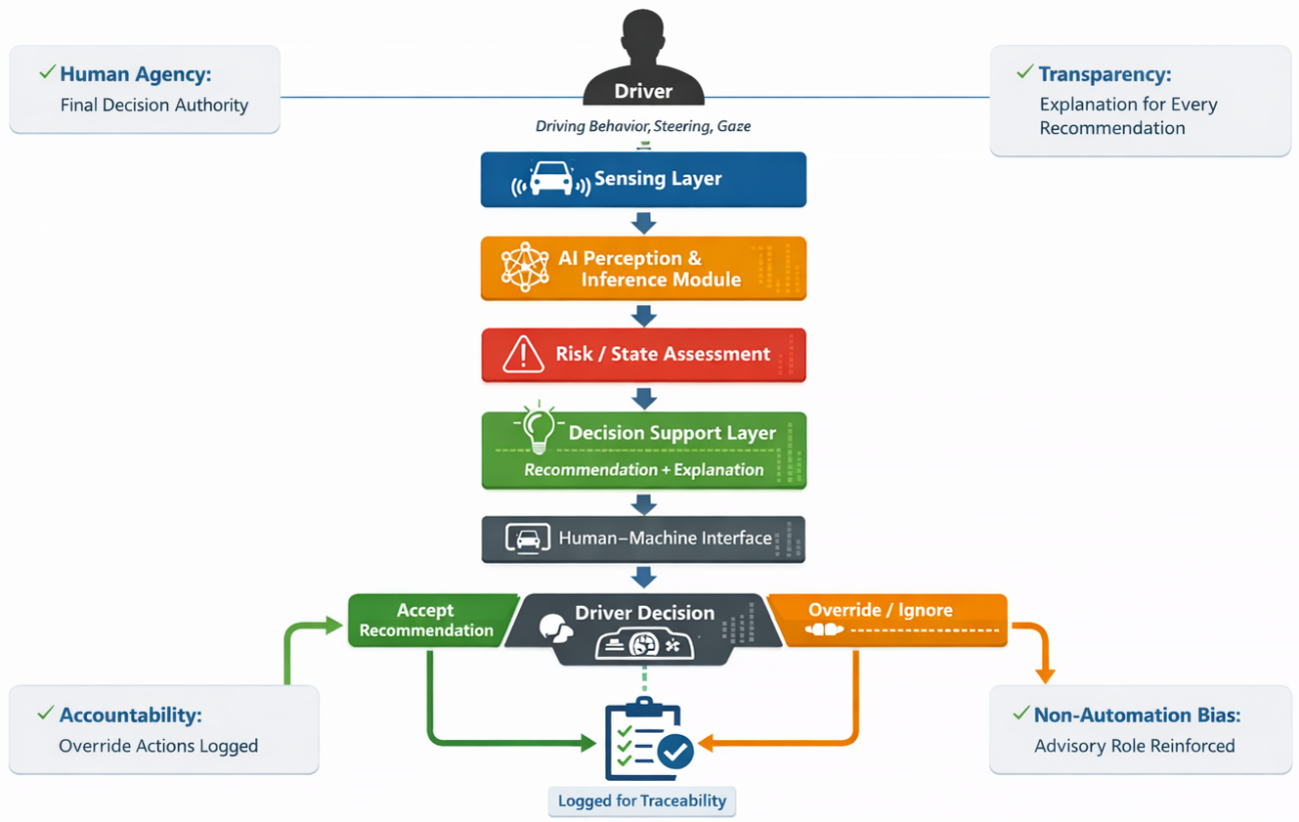
TRUST-AI is a European Union-funded project supported through the REINFORCING ORRI Incubator programme, bringing together two Greek partners: AviSense.ai and InterMediaKT. The project focuses on embedding Open and Responsible Research and Innovation (ORRI) principles into the design, development, and governance of AI-enabled mobility systems, with particular emphasis on Human-in-the-Loop Advanced Driver Assistance Systems (ADAS) and AR-based driver support technologies.
The main objective of TRUST-AI is to move beyond high-level ethical declarations and translate responsible AI principles into practical engineering, governance, and stakeholder engagement mechanisms. The project develops ethical and operational guidelines for AI-supported ADAS functions, addressing key issues such as explainability, driver override, consent, data governance, uncertainty communication, fairness, and accountability. These guidelines are aligned with emerging EU AI Act requirements and GDPR principles.
A core part of the project is the use of realistic mobility use cases, including cognitive readiness assessment and AR-based occlusion-aware situational awareness, to explore how AI systems should communicate information to drivers, preserve human agency, avoid over-reliance, and prevent misleading or intrusive system behaviour. Through participatory workshops, scenario cards, voting scales, and a Deliberative Digital Panel, citizens and experts contribute to defining acceptable boundaries and “red lines” for responsible AI intervention in mobility.
In TRUST-AI, AviSense plays the key technical role, leading the responsible AI and ADAS-related work. The company is responsible for mapping Human–AI interaction flows, analysing data and decision chains, developing the ethical and operational guidelines, preparing use case material, and translating stakeholder feedback into concrete design and governance requirements. AviSense also contributes to the development of the internal ORRI strategy, the Responsible Design Toolkit for AI engineers, and the evaluation framework.
Deliverables
D1.1 – Mapping report on AI integration and data use
D1.2 – Ethical and Operational Guidelines for Human-in-the-Loop ADAS and Driver Monitoring Systems
Enhancing Driver Safety with Extended Reality

Acronym: XRive
Duration: 12 months
Timeline: 2025-2026
Project Type: Cascade Funding
Funding Agency: Horizon 2020
Website: https://xr2learn.eu/meet-open-call-2-winner-xrive/
XRive explores how Extended Reality (XR) technologies can enhance driver training, situational awareness and trust in next-generation Advanced Driver Assistance Systems (ADAS). Through immersive training environments and a human-in-the-loop approach, drivers can experience, evaluate and become familiar with XR-based interfaces before these technologies are deployed in real-world driving scenarios.
Within the project, AviSense contributes advanced AR-based visualization and cooperative perception capabilities that enable potentially hazardous information to be presented directly to the driver. Static hazards, such as potholes or roadworks, as well as dynamic and potentially occluded road users, including vehicles and pedestrians, can be detected, geolocated and communicated to nearby users. The resulting AR interface provides early, intuitive visual warnings even when a hazard is outside the driver’s direct field of view, supporting faster and better-informed reactions.
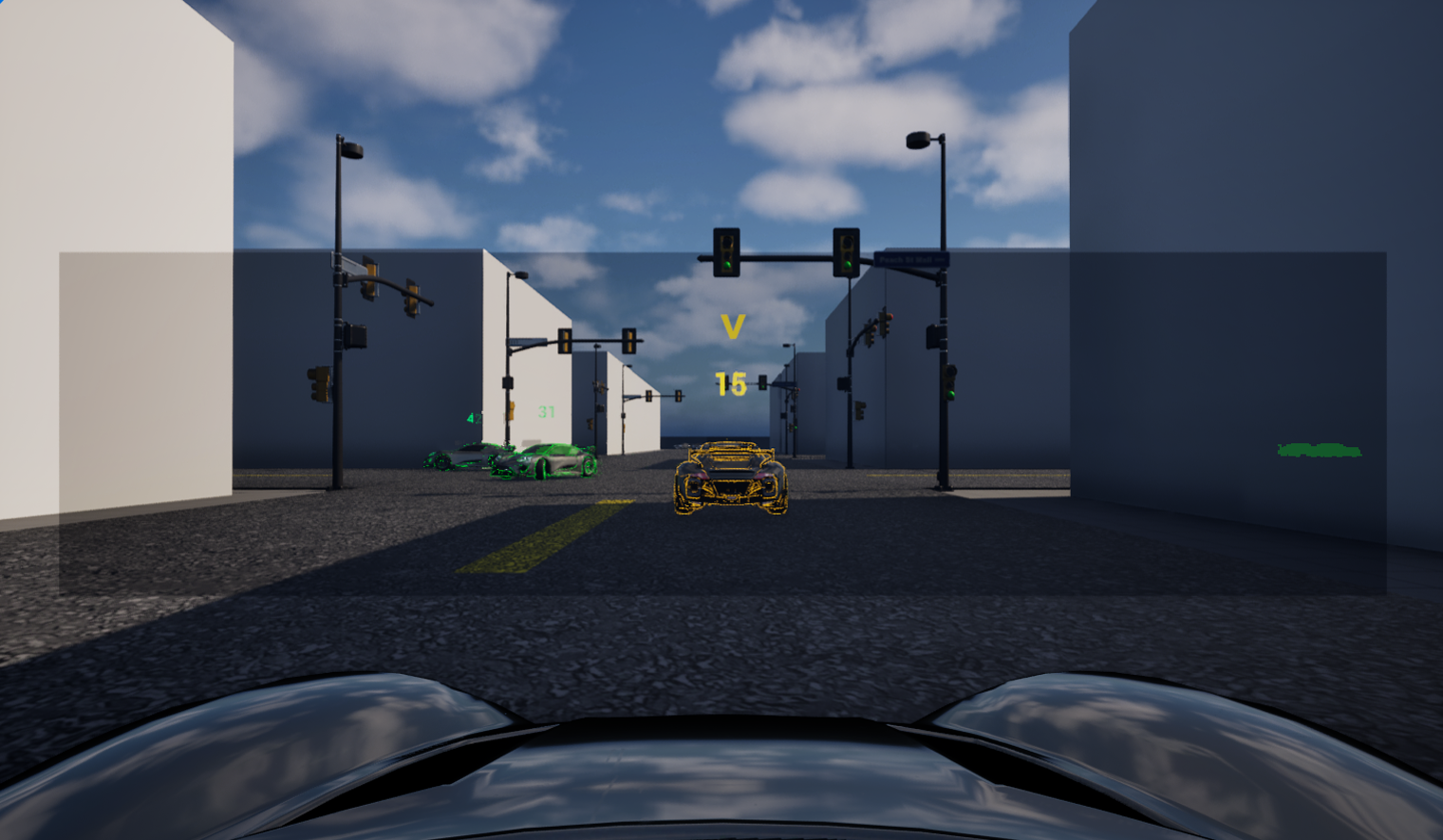
The XRive platform also investigates different visualization techniques, warning strategies and levels of information prioritization. Through immersive driving simulations, users can learn how to interpret new AR visual cues, personalize how information is displayed, and evaluate the usefulness, efficiency and acceptability of different warning mechanisms. This feedback supports the development of safer, less distracting and more user-centered automotive XR solutions.
The video below demonstrates key XRive concepts and technologies developed to improve driver awareness, training and interaction with future XR-enabled mobility systems.
Enhanced Driver Awareness through Cooperative XR Technologies
Acronym: SafeDriveXR
Duration: 6 months
Timeline: 2025
Project Type: Cascade Funding
Funding Agency: 6G-XR Vertical Replicability Enablers Open Call (OC3)
Website: https://6g-xr.eu/open-calls/oc3/
With the recent technological breakthroughs in connected and semi-automated transport, there is no doubt that a shared vision for a large-scale deployment of Cooperative Intelligent Transport Systems (C-ITS) in the European Union exists.
Connected and Automated Vehicles (CAVs) are expected to be the cornerstone of tomorrow’s EU-envisioned envisioned Cooperative, Connected, and Automated Mobility (CCAM), being able to extend their perception capabilities beyond the range of individual sensors, boosting the drivers’ situational awareness and enhancing performance, safety and comfort.
Equally importantly, 5/6G-enabled vehicular networks are expected to minimize network latency and delay, provide critical information regarding the environment, in a timely manner, and meet human reaction times in visual feedback.
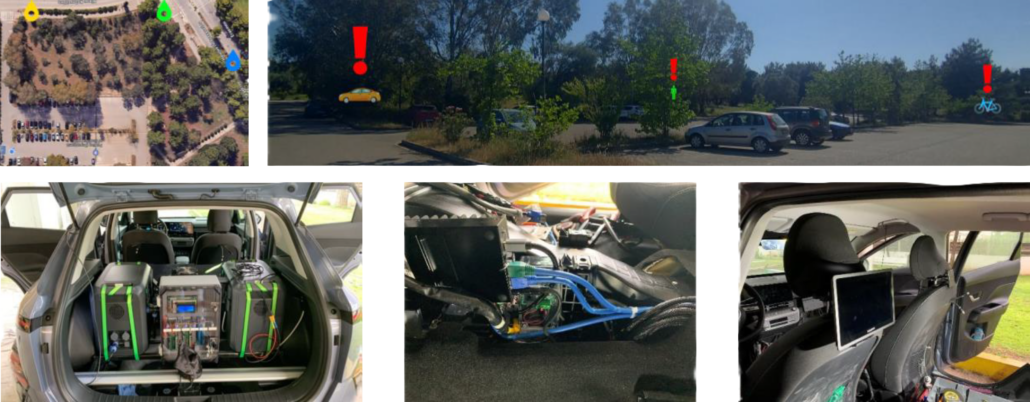
In this framework, AviSense developed a new 5/6G-enabled paradigm incorporating multiple heterogeneous devices that cooperate to provide drivers with highly interactive eXtended Reality (XR) interfaces and tools for real-time visualizations of traffic, road conditions, and obstacles, helping them to improve decision-making, reduce response times to hazards, and increase overall road safety.
This will be achieved by novel distributed and cooperative signal processing and learning approaches integrated over the cloud edge continuum, capitalizing dynamic 5/6G-enabled cloud-to-edge services across the vehicular network.
These will enable the accurate identification of user situational awareness of different critical situations and the correct and timely detection of road obstacles, vehicles, and Vulnerable Road Users (VRUs).
The novel strategies for service component distribution and intelligent coordination will significantly reduce communication latencies, meeting human reaction time in visual XR feedback.
The use of XR interfaces and QoE evaluation methodologies will boost personalization & adaptation of the rendered information based on user context.
ESA BIC Greece Incubation

Acronym: ESA BIC
Duration: 18 months
Timeline: 2024-2025
Project Type: Business Incubation Center
Funding Agency: ESA
Website: https://esa-bic.gr/avisense/
AviSense’s solutions enhance the safety and efficiency of (semi)-autonomous vehicles by combining data (maps, satellite data, location information, etc.) with AI-driven scene understanding, perception and highly precise localization capabilities on a global scale.
We provide comprehensive solutions that enable real-time 4D location awareness of neighboring road agents, increasing significantly safety, energy efficiency reduction, driver situational awareness, and passenger experience.
5G Intelligent Automotive Network Applications Open Call #2
Acronym: 5G-IANA OC2
Duration: 6 months
Timeline: 2024
Project Type: Cascade Funding
Funding Agency: EU Horizon 2020
Website: https://www.5g-iana.eu/get-involved/open-call-2/
The 5G-IANA project, funded by the European Union’s Horizon 2020 research and innovation programme, launched its second Open Call to support European SMEs and start-ups in developing and testing innovative automotive network applications using 5G technology.
This initiative aimed to provide participants with access to the 5G-IANA platform, enabling them to experiment with 5G-enabled communication systems and integrate their solutions into a cutting-edge 5G ecosystem.
Through this Open Call, selected applicants received mentorship and technical support to build their experiments and position themselves within the 5G landscape. The program emphasized fostering innovation in the automotive sector by leveraging 5G capabilities, there by contributing to the advancement of connected and autonomous vehicle technologies
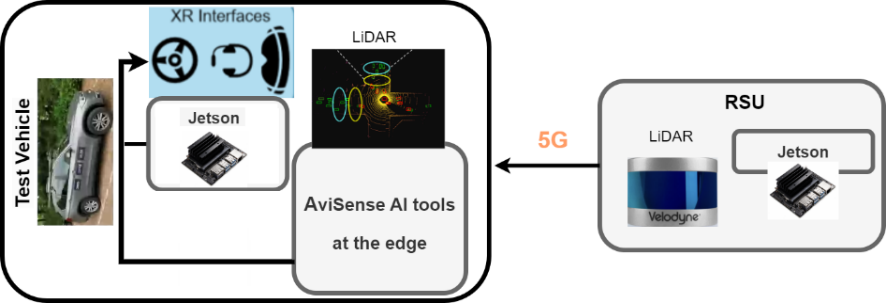
In the 5G-IANA project, AviSense designed, implemented, and deployed advanced Cooperative Localization and Crossview Geolocalization systems aimed at significantly enhancing situational awareness for Connected and Automated Vehicles (CAVs) by leveraging the low-latency, high-bandwidth capabilities of 5G networks.
These systems were tested in realistic and challenging deployment scenarios, demonstrating high-accuracy performance, efficient sensor data integration, and pushing forward the technological maturity of our perception and localization solutions.
A Comprehensive Trustworthy Framework for Connected Machine Learning and Secure Interconnected AI Solutions

Acronym: Coevolution
Duration: 36 months
Timeline: 2024-2027
Project Type: European Research Projects
Funding Agency: Horizon 2020
Website: https://coevolution-project.eu/
Coevolution is a European Union-funded project under the Horizon Europe research and innovation program, bringing together 15 partners from various countries.
The main objective is to focus on establishing a comprehensive security and risk assessment process for AI models throughout their lifecycle, ensuring security-by-design under various paradigms (single, collaborative, or interconnected AI agents). A Security, Trust, and Robustness Defense Framework will be developed to align with EU AI regulations.
The initiative aims to create a CoEvolution hub for secure AI supply chains, validated through complex pilots, and culminate in a sustainable business plan. In the Coevolution project, AviSense plays a key role as the leader of WP6, overseeing multiple technical tasks and co-leading the automotive pilot alongside AVL.
The company is responsible for developing adversarial attack strategies and designing robust defense mechanisms for both single-agent and collaborative perception scenarios in autonomous systems.